Key takeaways
- At Google I/O 2026, Google showed Ask Play (a Gemini chat on every listing), Guided Search, AI-generated lists in search results, Play Shorts, and app recommendations inside the Gemini app.
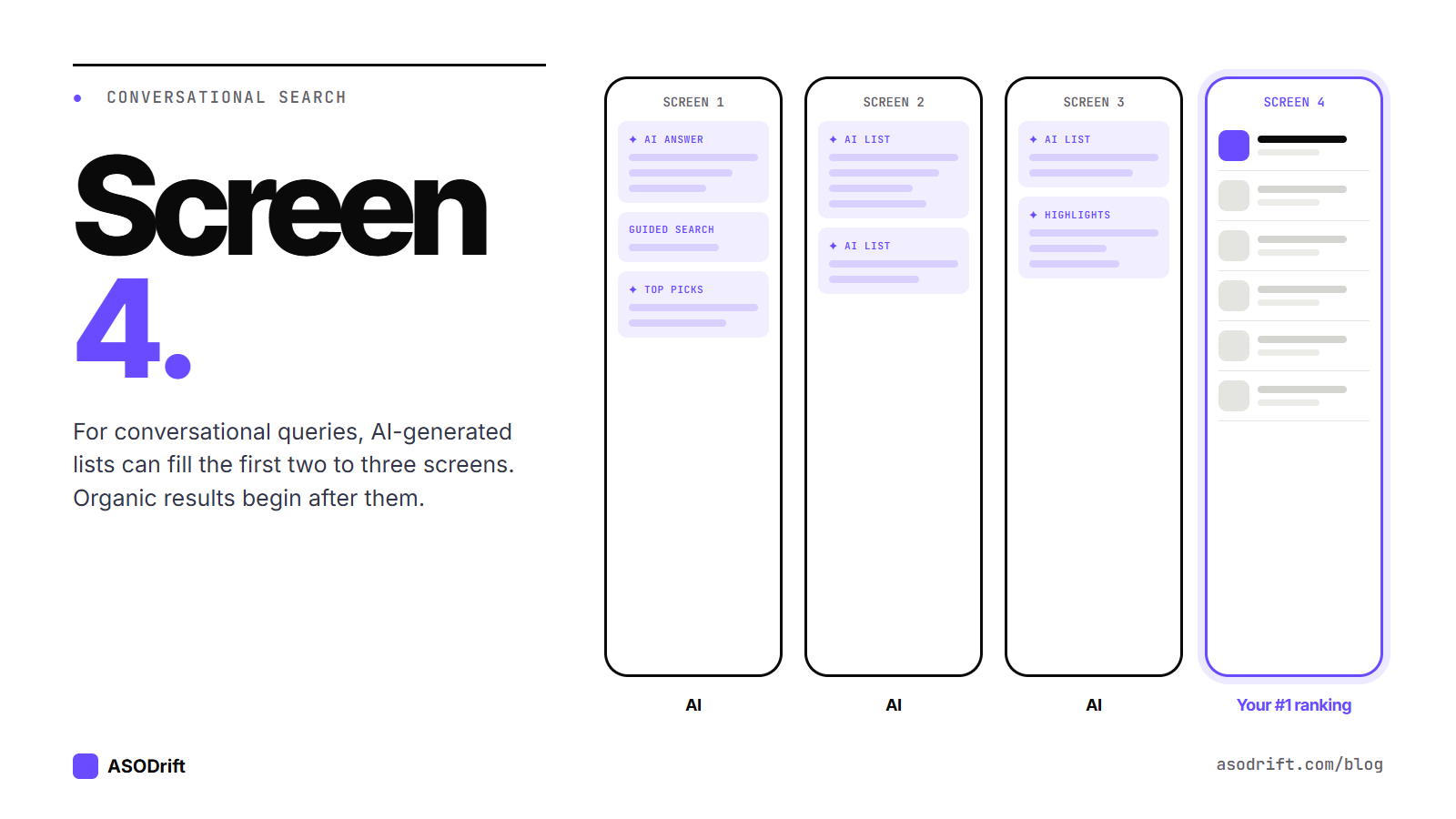
- AppTweak observed that for conversational queries, AI lists take the first two to three screens and organic results begin on the fourth screen onwards.
- Short and mid-tail keywords were less affected so far, and rollout started on English-language devices.
- Your listing now has two readers: the ranking algorithm and an AI that summarises your app. Write for both.
- Keyword rankings still matter, but you need to know which of your keywords now sit below an AI block.
For years the rule was simple: rank in the top few results for a keyword and you get the installs. In 2026 that rule has an asterisk. On a growing number of Google Play searches, the first thing people see isn’t a list of apps. It’s an AI answer.
What Google changed
Google showed a set of AI discovery features at Google I/O in May 2026:
- Ask Play: a Gemini-powered chat on store listings that answers questions about an app before someone installs it. AppTweak reports it draws on both your Play description and your app’s website.
- Guided Search: for broad searches, Play suggests narrower sub-queries (for example “fighting games” → “arcade fighting games”). AppTweak notes it has been rolling out since September 2025.
- AI-generated lists in search results, mainly for longer, conversational queries.
- Play Shorts: a full-screen, short-form video feed of apps, launching in the US first.
- Gemini app discovery: the Gemini app can recommend apps and install them without opening the Play Store.
Screen four
The headline finding comes from AppTweak’s analysis of the changes: for conversational queries, AI-generated lists occupy the first two to three screens, and traditional organic results begin on the fourth screen onwards. If someone searches “an app to help me fall asleep without ads”, the list they scroll through first is written by Gemini, not ranked by keyword relevance.
Your listing now has two readers
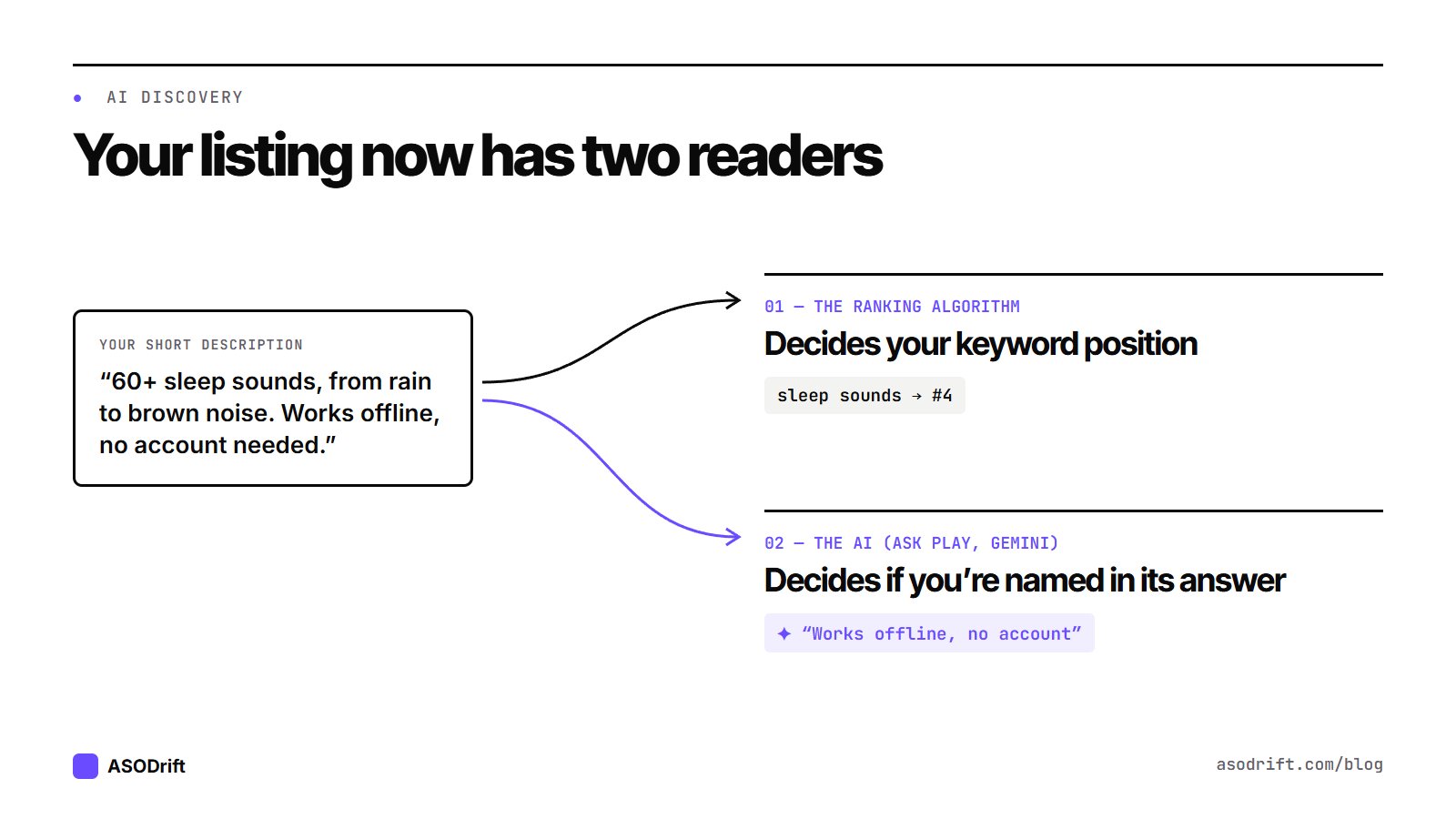
The ranking algorithm reads your listing to decide where you rank for a keyword. The AI reads it to decide whether your app gets named in an answer, and how it gets described. Vague, stuffed or outdated text now costs you twice.
What to do this month
- Find out which of your keywords are conversational. Those are the ones most likely to sit under an AI block now.
- Rewrite your short description and first lines of your long description as plain, specific sentences: who the app is for, what it does, pricing, offline support. That is what an AI quotes.
- Make your website say the same thing as your store listing. Ask Play reads both.
- Ask Gemini the questions your users ask, like “best app for X”, and note whether you are named. Repeat monthly.
- Keep tracking short and mid-tail keywords daily. They still drive most installs and are less affected so far.
- Prepare a short vertical video. Play Shorts is starting in the US and will reward apps that show the product quickly.
“Best sleep app!!! Sleep sounds, white noise, rain, relax, calm, meditation”
“60+ sleep sounds, from rain to brown noise. Works offline, no account needed.”
Do keyword rankings still matter?
Yes, but they need context. A #1 ranking for a short keyword is still valuable. A #1 ranking for a long, conversational query may now sit below several screens of AI content, and Play Console won’t tell you which is which. Tracking your positions daily, and knowing which keywords are affected, is how you decide where to spend effort.
+What is Ask Play?
A Gemini-powered chat on Google Play store listings that answers questions about an app before people install it. AppTweak reports it uses both your Play description and your website.
+Which searches show AI lists?
Mainly longer, conversational queries. Short and mid-tail keywords have been less affected so far.
+Is this available everywhere?
No. Rollout started on English-language devices and some regions, including several EEA markets, were reported as well behind.
+Should I stop caring about keyword rankings?
No. Short and mid-tail keywords still drive most search installs. Track them daily and pay extra attention to conversational ones.
Sources
- AppTweak: Google I/O 2026, what the Gemini era means for Google Play ASO
- 9to5Google: Google Play gets Ask Play as Gemini starts recommending apps (May 2026)
- Yellowhead: Ask Play, Gemini and Google I/O 2026 ASO strategy
Specifications and figures are as published by Google and the listed sources at the time of writing; check Play Console for the latest.
Know where you rank. Every morning.
One app, five keywords, daily checks. Free, no card.
Start tracking free