Key takeaways
- Since 30 September 2026, verification protections apply to installs from participating stores in Brazil, Indonesia, Singapore and Thailand on certified devices running Android 7+.
- Google says it will expand verification globally for all apps on certified Android devices in 2027.
- If you publish on Google Play, you have most likely already verified. Google says Play automatically registers 99% of apps.
- Students, teachers and hobbyists can share apps with up to 20 devices through a limited distribution account, without a government ID or registration fee.
- Power users keep an “advanced flow” for installing unverified apps.
For most of Android’s history, anyone could build an APK and anyone could install it. That is changing. Google now requires apps on certified Android devices to come from developers who have verified their identity, and the rule covers apps installed from outside Google Play too.
The change has been controversial in developer communities, and a lot of what is shared about it is wrong. Here is what Google has actually announced, what it means for you, and what to do this week.
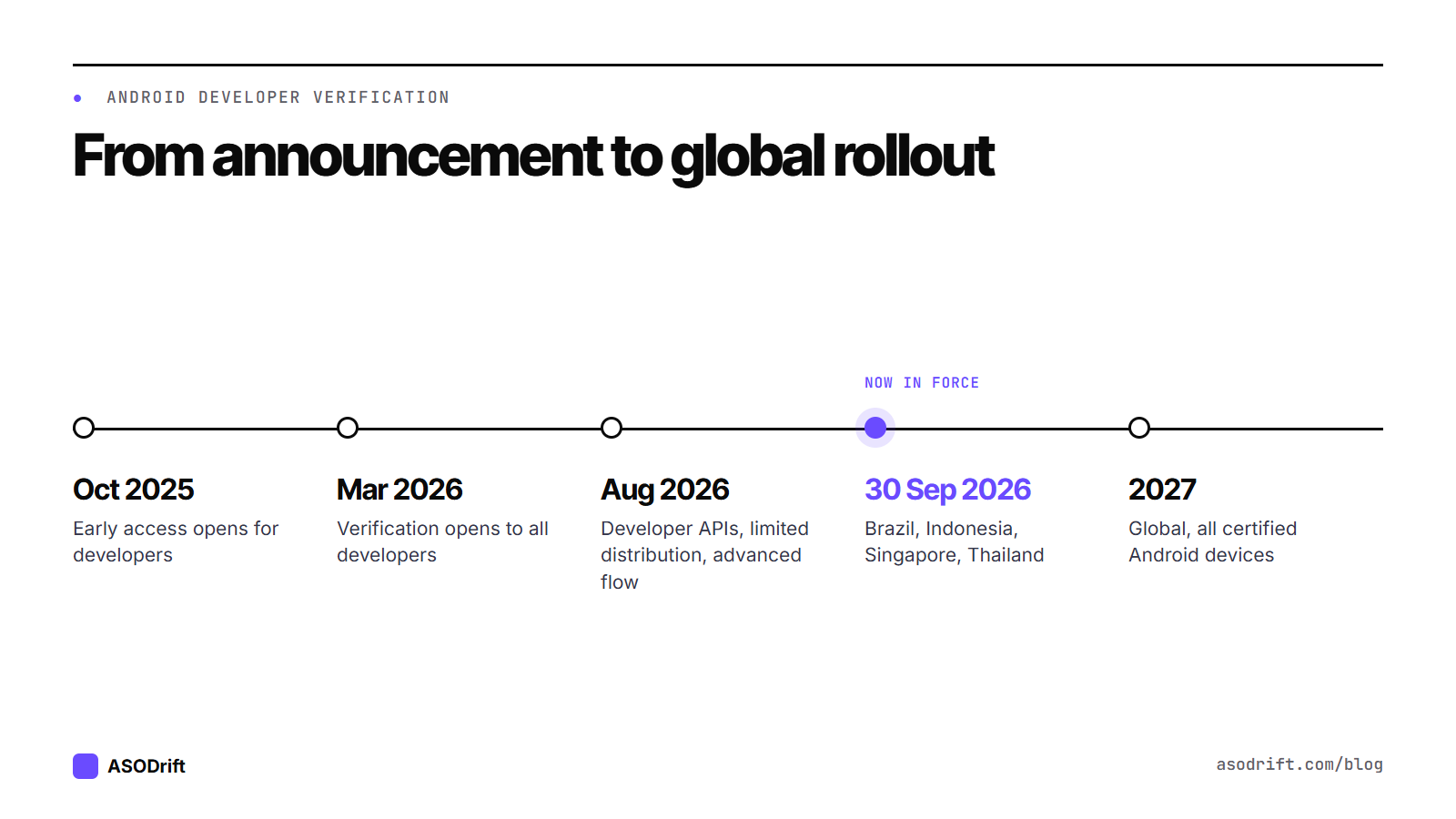
What changed on 30 September 2026
According to Google’s developer verification page, protections began on 30 September 2026 “for all users who install apps from participating stores in Brazil, Indonesia, Singapore, and Thailand on certified devices running Android 7+.” Google says the capability “will be expanded globally for all apps on certified Android devices in 2027.”
“Certified Android devices” are the phones and tablets that ship with Google Play Protect and Google’s apps preinstalled, which is almost every Android phone sold outside China.
- 30 Sep 2026
- protections start in 4 countries
- 2027
- global expansion, per Google
- 99%
- of Play apps registered automatically
- 20
- devices on a free limited distribution account
Why Google is doing it
Google’s stated reason is scams and malware. When the plan was announced in August 2025, Google said it had found over 50 times more malware from internet-sideloaded sources than from apps on Google Play. Google has compared verification to an ID check at the airport: it confirms who the developer is, separately from the security scanning of the app itself.
Which path are you on?
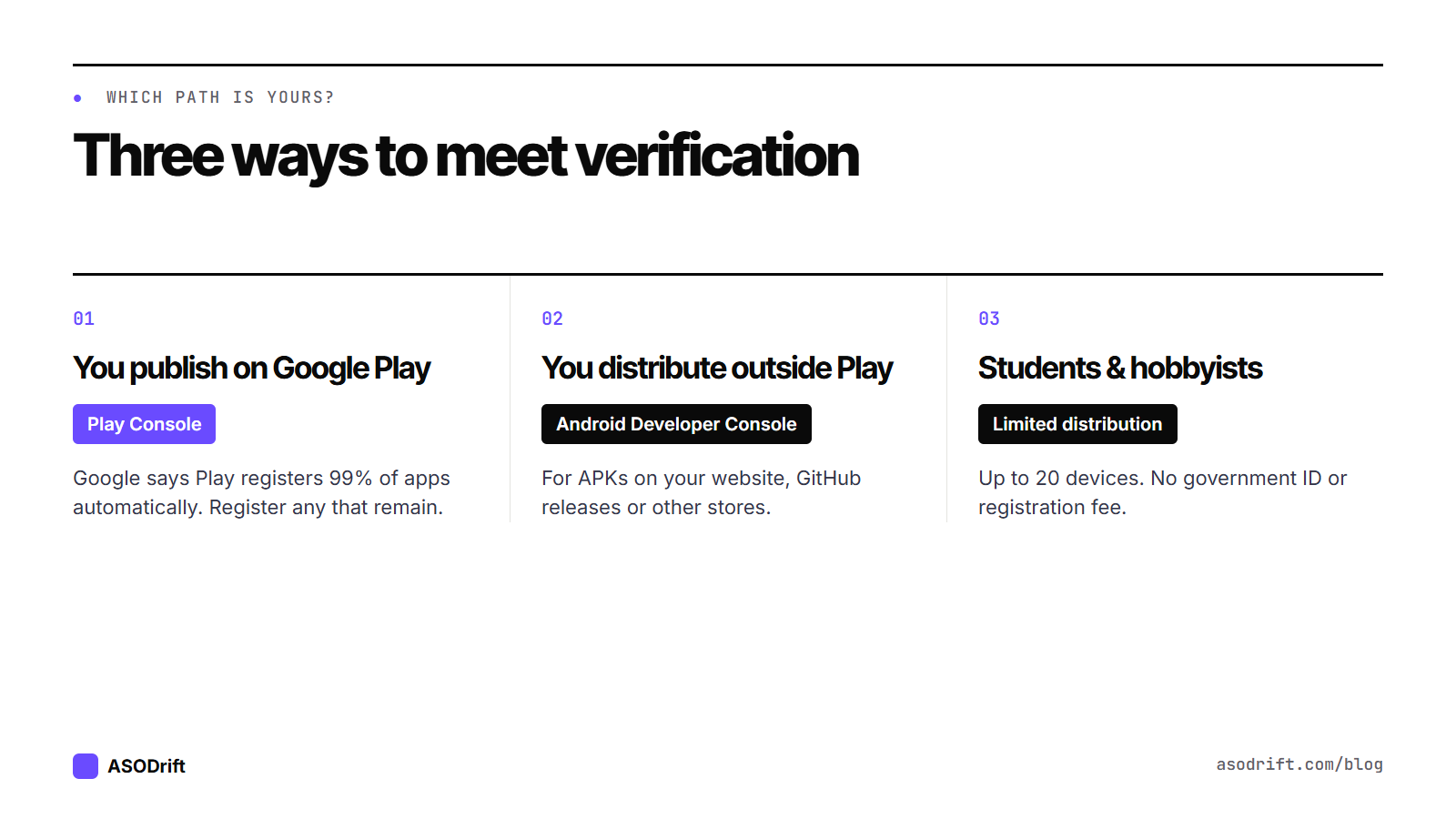
1. You publish on Google Play
This is most readers of this blog. Google says Play “automatically registers 99% of apps”, and developers who already completed Play Console identity verification have likely met the requirement. Use Play Console to register any remaining apps, or apps you also distribute outside Google Play.
2. You distribute outside Google Play
If you ship APKs from your own website, GitHub releases or another store, you register through the new Android Developer Console, which Google built for developers who distribute exclusively outside Google Play.
3. You are a student, teacher or hobbyist
Google’s limited distribution accounts let you share apps with up to 20 devices without a government-issued ID or registration fee. That covers classroom projects, betas for friends and personal tools.
Your 15-minute checklist
- Open Play Console and confirm your developer account shows identity verification as complete.
- Check that every app you distribute, including ones only shared outside Play, is registered to your account.
- If you have apps that live only outside Play, create an Android Developer Console account and register them.
- If you ship test builds to friends or students, move them to a limited distribution account.
- Keep your contact details current. Verification ties your apps to a real identity, and outdated details can block updates.
- Watch for Google’s regional rollout announcements before 2027 if most of your users are outside the first four countries.
Does this affect your Play Store rankings?
There is no indication that verification itself changes search rankings on Google Play. What it can affect is distribution: if an app outside Play is not registered, users on certified devices in participating regions may be blocked from installing it. For Play-only developers who are already verified, rankings continue to depend on relevance, conversion and quality as before.
+Do I need to verify if I only publish on Google Play?
You have most likely already verified through Play Console. Google says Play automatically registers 99% of apps; use Play Console to register any that remain.
+Which countries are affected first?
Brazil, Indonesia, Singapore and Thailand, from 30 September 2026, for installs from participating stores on certified devices running Android 7 or later.
+When does it go global?
Google says verification will be expanded globally for all apps on certified Android devices in 2027.
+Can I still share an app with a few friends without verifying?
Yes, through a limited distribution account: up to 20 devices, with no government ID or registration fee.
+Can users still install unverified apps?
Google says power users will have an advanced flow to install unverified apps.
Sources
- Android Developers: Android developer verification
- 9to5Google: Google will require developer verification to install Android apps (Aug 2025)
Specifications and figures are as published by Google and the listed sources at the time of writing; check Play Console for the latest.
Know where you rank. Every morning.
One app, five keywords, daily checks. Free, no card.
Start tracking free